

What Is “Ōkawa Furniture”? How to Choose Furniture That Is Truly Made in Ōkawa, Japan
The name “Ōkawa Furniture” is widely known in Japan. However, in today's market, there are cases where furniture not actually made in Ōkawa is sold under the label “Ōkawa Furniture.” This article explains the history of Ōkawa—Japan’s largest furniture-producing region—how the trademark works, and how to correctly identify furniture that is truly made in Ōkawa.
Table of Contents
- 1. The Origins of Ōkawa Furniture — Japanese Quality × Mass Production × Affordability
- 2. Why “Affordable Japanese Furniture” Lost Its Advantage
- 3. The Term “Ōkawa Furniture” Is Trademarked — But Not a Certification of Origin
- 4. Some Companies in Ōkawa Also Sell Imported Furniture
- 5. Factories Around Ōkawa: “Craftsmanship-Based” vs. “Mass-Production-Based”
- 6. Why the Policy and Philosophy of the Seller Matters
- 7. How to Confirm Whether Furniture Is Truly Made in Ōkawa
- 8. Where We Stand — 100% Japan-Made, Ōkawa-Centered, and Our Original Certification System
- 9. Summary — What You Should Always Check Before Buying
1. The Origins of Ōkawa Furniture — Japanese Quality × Mass Production × Affordability
Ōkawa City in Fukuoka Prefecture has been one of Japan’s leading furniture-producing regions since the Edo period.
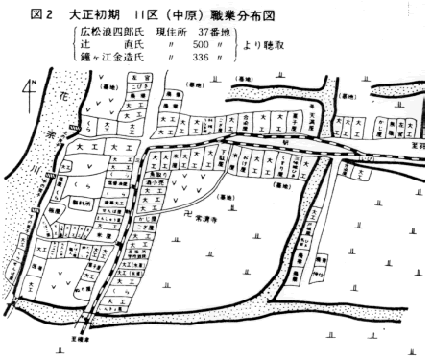
Source: Ōkawa Traditional Crafts Association
During Japan’s rapid economic growth, Ōkawa combined traditional woodworking skills with mass-production systems to create:
“High-quality Japanese-made furniture at affordable prices.”
In other words, Ōkawa established a reputation based on:
Quality × Cost × Production Volume
—becoming a region trusted nationwide for reliable Japanese furniture.
2. Why “Affordable Japanese Furniture” Lost Its Advantage
Since the 2000s, globalization has dramatically changed the furniture industry:
- Low-cost manufacturing centers in China and Southeast Asia
- Differences in labor and material costs
- More efficient logistics and container shipping
As a result, mass-produced Japanese furniture could no longer compete on price alone. Maintaining Japanese labor standards and quality control made low-cost production difficult.
This trend affected not only Ōkawa, but the entire Japanese furniture industry.
3. The Term “Ōkawa Furniture” Is Trademarked — But Not a Certification of Origin
Here is a key fact: “Ōkawa Furniture” is registered as a Regional Collective Trademark by the Ōkawa Chamber of Commerce & Industry. It can be verified in the Japan Patent Office database.
 Regional Collective Trademark: Ōkawa Furniture
However — and this is crucial — the trademark does NOT function as a certification that the furniture was made in Ōkawa.
Additionally, the Chamber of Commerce does not strictly regulate its usage. This means:
- Companies outside Ōkawa can use the name “Ōkawa Furniture.”
- Some stores label imported products as “Ōkawa Furniture.”
- Consumers may mistakenly assume the furniture was made in Ōkawa.
This is not illegal; it is simply how the trademark system works. But it means that the label “Ōkawa Furniture” alone does NOT guarantee origin or quality.
4. Some Companies in Ōkawa Also Sell Imported Furniture
Another point that complicates things: Even companies based in Ōkawa do not necessarily sell Ōkawa-made furniture.
- Some sell primarily Ōkawa-made furniture
- Some handle imported or non-Ōkawa furniture
- Some use “Ōkawa Furniture” in their shop name while selling mostly overseas products

Therefore, a company being located in Ōkawa does NOT guarantee that its products are made there.
5. Factories Around Ōkawa: “Craftsmanship-Based” vs. “Mass-Production-Based”
To truly understand Ōkawa furniture, it's important to know that Ōkawa-area factories vary significantly in how they produce furniture.
(1) Craftsmanship-Based Workshops
- Wood selection done manually, piece by piece
- Many steps done by hand
- Flexible with custom sizes and special orders
- Focus on durability, precision, and long-term use
These are craftsman-style factories where traditional woodworking skills remain central.
(2) Mass-Production Factories
- Large-scale material procurement and assembly lines
- Minimal human intervention
- Optimized for large orders and cost efficiency
Both styles exist in Ōkawa — meaning “made in Ōkawa” can vary greatly in quality depending on the factory.
6. Why the Policy and Philosophy of the Seller Matters
Given the complexity:
- Trademark ≠ Certification
- Ōkawa-based companies may sell imported furniture
- Factories vary from artisan workshops to large mass-production
the most important factor becomes:
“What kind of factories does the seller work with, and what is their philosophy?”
A trustworthy seller will:
- Work directly with local Ōkawa workshops
- Disclose manufacturing details
- Prioritize safety, durability, and long-term value
7. How to Confirm Whether Furniture Is Truly Made in Ōkawa
Here are the three most reliable ways to confirm authenticity:
① Check whether the seller is trustworthy
- Do they explicitly state they handle Ōkawa-made furniture?
- Do they disclose which factories they work with?
- Do they explain durability, safety, and materials?
② Check whether the manufacturer is clearly identified
- Is the specific factory in Ōkawa (or nearby) named?
- Are artisans or production processes shown?
③ Ask the seller directly — the most reliable method
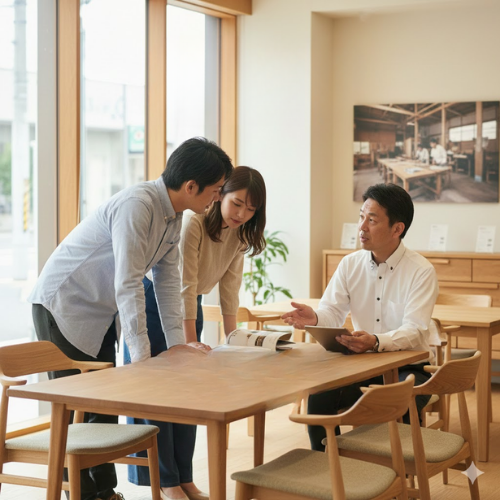
“Was this furniture truly made in Ōkawa?”
“Which factory produced it?”
A sincere seller will answer clearly and transparently.
Additionally, some sales staff mistakenly believe “Ōkawa Furniture” is a single company rather than a region. Therefore, it’s even more important to ask:
“Which Ōkawa factory made this?”
8. Where We Stand — 100% Japan-Made, Ōkawa-Centered, and Our Original Certification System
At Ōkawa Furniture Dot Com, we operate with three clear principles:
① All products are 100% Japan-made
We do not sell imported furniture — only genuine Japanese-made furniture.
② Our core lineup is made in Ōkawa and nearby regions
- Factories registered in the Ōkawa Furniture Industry Association
- Local workshops and artisan-based factories
We aim to help customers clearly understand what is truly Ōkawa-made.
③ We independently certify the highest-quality Ōkawa-made furniture
We evaluate furniture based on:
- Craftsmanship
- Structural strength
- Safety and environmental standards
- Long-term durability
Details here: 👉 UPPER OKAWA — Our High-Grade Ōkawa Certification
9. Summary — What You Should Always Check Before Buying
Because of the current market situation:
- “Ōkawa Furniture” does not guarantee origin
- Even Ōkawa-based companies may sell imported furniture
- Quality varies by factory and production method
To avoid buying something different from what you expected, always confirm:
- Which factory made the furniture
- What philosophy the seller follows
- And ask directly: “Is this truly made in Ōkawa?”
At Ōkawa Furniture Dot Com, we handle only Japan-made furniture and focus on Ōkawa-made products, so our customers can confidently choose authentic furniture that reflects the true craftsmanship of Ōkawa.
