

When it comes to drawer construction, there are two main approaches: the classic wood-on-wood “no-rail” structure, and the more modern metal rail system. Most mass-produced furniture in today’s global market relies on metal rails. In contrast, Japan’s high-end furniture makers and traditional tansu craftsmen continue to intentionally use the no-rail, wood-on-wood method—not out of nostalgia, but because it delivers airtightness, long-term durability, and a uniquely refined tactile experience that hardware simply cannot replicate.
At the same time, metal rails have evolved tremendously and remain the smartest choice for furniture designed to handle heavy daily-use items such as tableware. In this guide, we explore what truly defines a “well-made chest,” why some mass-produced no-rail furniture wobbles or sticks, and how to choose the right drawer system for your home.
About Our Guide: Taiyo Tsutsumi
 |
Taiyo Tsutsumi is the President and CEO of Okawa Furniture Dot Com Co., Ltd. and a certified real estate transaction specialist. Born and raised in Okawa City, Fukuoka Prefecture—Japan’s renowned furniture town—he began assisting with his family’s furniture wholesale business in 2006. Driven by a passion to share high-quality, domestically made furniture with the world, he launched the online store Okawa Furniture Dot Com that same year. |
1. A Traditional Benchmark of Quality: “If another drawer gently slides out, it’s a good chest.”
Japanese woodworking has a long-standing saying:
“When one drawer is pushed in and another gently pops out, the chest is exceptionally well made.”
▼ See this traditional phenomenon in action:
https://www.youtube.com/shorts/RCKmCT8KSac
This simple motion is actually a precision test. When one drawer is pushed in completely, the internal air compresses. In a chest with exceptional airtightness—made possible only by wood-on-wood, no-rail construction—the trapped air gently pushes another drawer outward.
A Tip from Our Expert, Taiyo Tsutsumi:
|
This “air push” effect is the hallmark of a chest crafted with tight tolerances. It’s not a gimmick—it’s the natural result of precision joinery and an airtight wooden structure. |
We also verified this airtightness through a real humidity test on a paulownia chest, conducted during Japan’s rainy season:
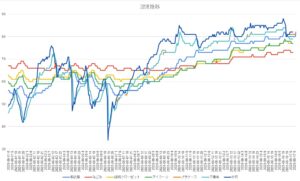 Moisture protection test for paulownia tansu (airtight storage)
2. Why Airtight, No-Rail Drawers Excel at Clothing Storage
Certain garments demand protection from humidity and insects—especially items like:
- Kimonos and formalwear
- Wool and cashmere
- Delicate natural fibers
- Knitwear prone to insect damage
Wood-on-wood construction excels because:
- It allows for minimized gaps
- Solid wood naturally regulates humidity
- Fewer openings mean better protection from insects and dust
A Tip from Our Expert, Taiyo Tsutsumi:
|
A well-built no-rail chest creates a micro-environment ideal for long-term garment preservation—something metal-rail systems simply cannot replicate. |
For a deeper comparison of storage methods, see this detailed analysis (Japanese):

3. When No-Rail Drawers Underperform: Wobble, Misalignment, and Sticky Movement
It’s important to remember that no-rail does not automatically mean “high quality.”
The real question is whether the maker has the precision, discipline, and philosophy to build no-rail drawers correctly. Unlike metal rails, which can compensate for small errors, no-rail drawers rely entirely on the accuracy of the wooden structure itself.
When precision is lacking, the user may experience:
- Side-to-side wobbling
- Slightly crooked drawer fronts
- Uneven heaviness or stickiness
- Seasonal jamming in humid or dry weather
A Tip from Our Expert, Taiyo Tsutsumi:
|
No-rail construction exposes everything—good or bad. Master craftsmen achieve smooth, quiet movement through hand-adjusted tolerances measured in tenths of a millimeter. |
4. For Heavy Loads Like Tableware, Metal Rails Are Often the Superior Choice
Metal rails are not inferior—far from it. In many situations, they outperform no-rail construction. Sideboards and kitchen cabinets, for example, typically hold:
- Plates and glassware
- Pots, pans and heavy cookware
- Cutlery and daily-use utensils
Modern rails offer:
- High load capacity (often 30–40 kg per drawer)
- Quiet movement with soft-close mechanisms
- Full-extension access even in deep drawers
- Effortless daily use even when heavily loaded
5. Choosing the Right System: Not “Which Is Better?” but “What Is the Purpose?”
◎ For clothing chests → No-rail, wood-on-wood drawers
- Superior airtightness
- Natural humidity regulation
- Easier long-term maintenance and repair
- Craftsmanship that lasts decades
◎ For kitchen and dining storage → Metal rails
- Handles heavy loads effortlessly
- Quiet, smooth, soft-close operation
- Practical full-extension drawers
The key considerations are:
- What will you store?
- What is the environment like?
- How many years will you use the piece?
- Who made it?
Conclusion
For garments and long-term clothing care, a precision-built no-rail chest offers unmatched airtightness and preservation. For kitchens and dining rooms, high-quality metal rails deliver the strength, quietness, and convenience required for heavy everyday items.
There is no universal “winner.” Instead, the best choice comes from understanding the purpose, environment, and the craftsmanship behind the piece.
Notes & Exceptions
- No-rail ≠ automatically high quality; metal rails ≠ low quality.
- Comments regarding mass-production limitations reflect general industry tendencies, not specific companies.
- If you have issues with your own furniture, consult a professional woodworker for an in-person assessment.
