

From Shiitake Logs to a Kunugi Chabudai: A Forest-to-Furniture Story from Kyushu
What does a dried shiitake mushroom have to do with a handcrafted Japanese table?
The connection is Kunugi, the Japanese sawtooth oak. For generations, this hard, dense tree has been grown in Kyushu to make the logs used in traditional shiitake cultivation. Today, as demand for those logs declines, some Kunugi trees are growing beyond the size once needed for that purpose.
This is the story of how one of those trees found a new role: not as a mushroom log, but as a folding Chabudai made in Okawa.
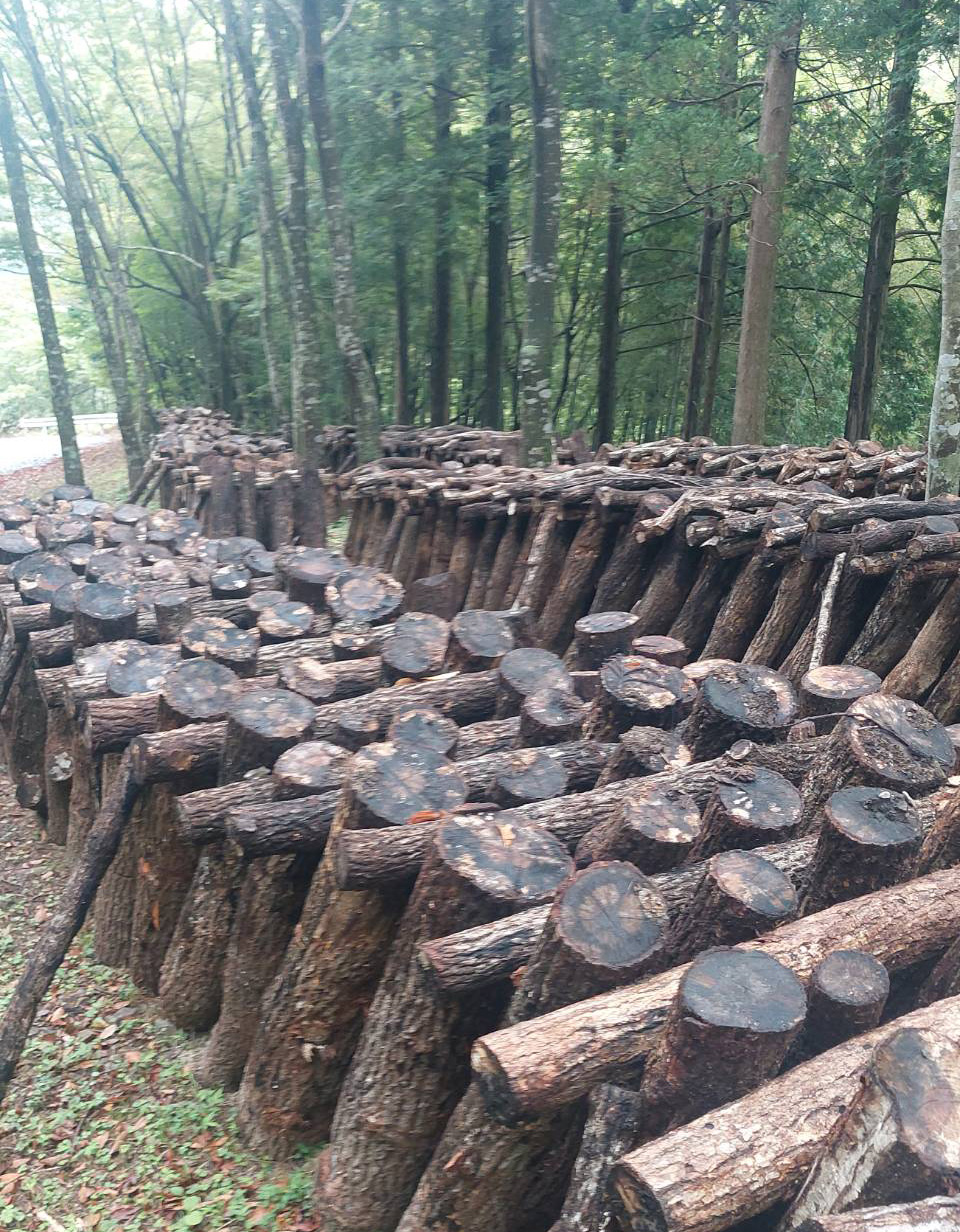
Kunugi and Oita's shiitake tradition
Oita Prefecture is Japan's leading producer of dried shiitake mushrooms and is especially known for traditional log-grown cultivation. The region also has rich stands of Kunugi, one of the preferred trees for making hoda-gi: logs drilled and inoculated with shiitake spawn.
Kunugi was not originally planted with furniture in mind. It was part of a working relationship between forests, food and rural livelihoods. The trees were cut at a suitable size, used to grow shiitake mushrooms and then allowed to regenerate from their stumps, creating a cycle in the managed woodland.
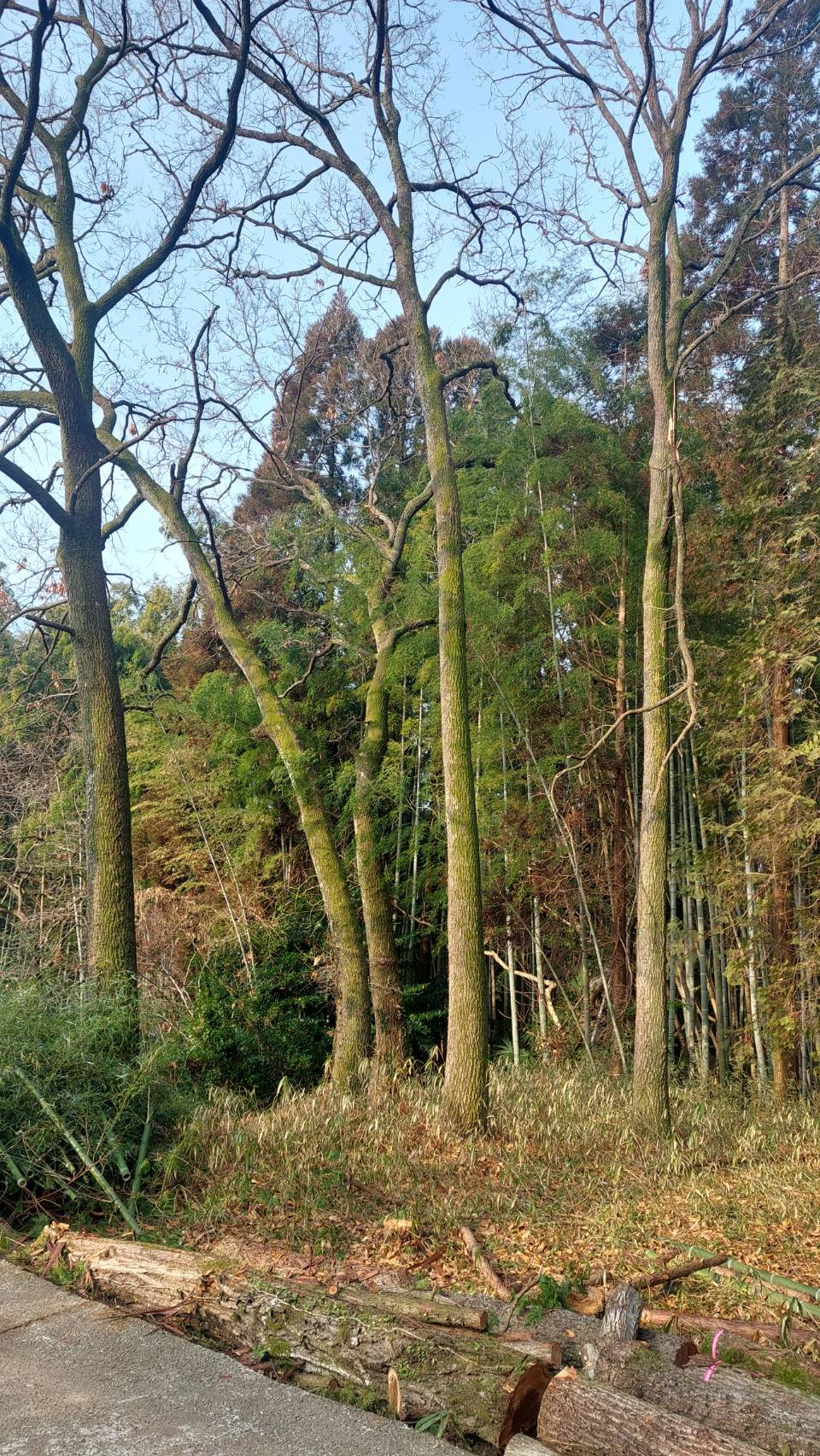
When a useful tree grows beyond its traditional role
In recent years, an aging population of mushroom growers and a shortage of successors have contributed to lower demand for shiitake logs. Kunugi trees left standing continue to grow. Eventually, their trunks become too large to handle conveniently as hoda-gi.
It sounds simple to say, “Then use the larger trees as timber.” In practice, Kunugi is a demanding material. It is exceptionally hard and heavy. It can also continue to move, warp or twist after drying, making it difficult to stabilize as a large furniture component.
Too large for its former role, yet challenging to use as furniture: a tree cultivated over many years risked being left without a practical destination.
Masaaki Ueki and a longer vision for Kyushu's forests
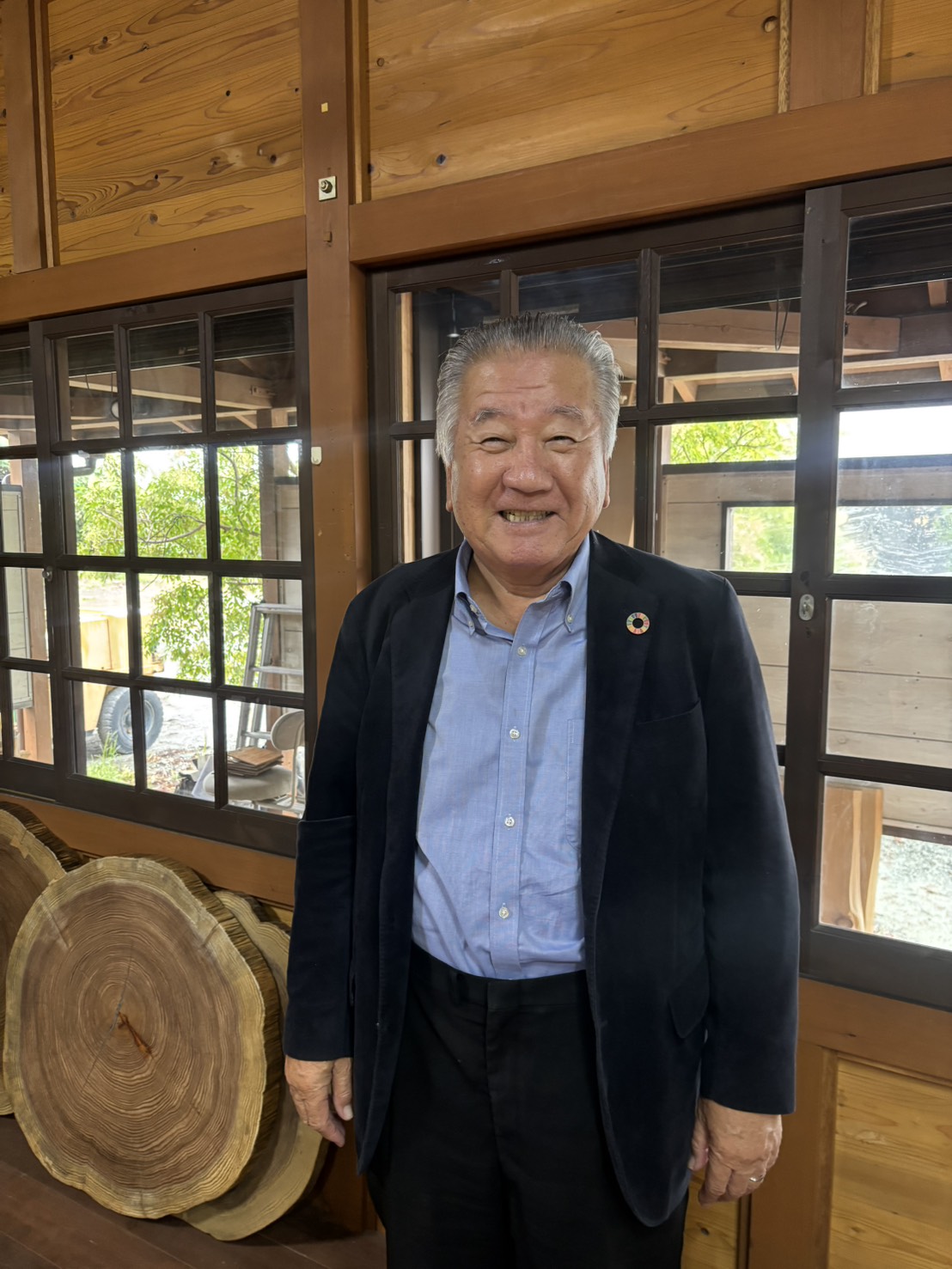
The furniture project began when the idea of finding a new use for Kunugi was brought to Okawa Kagu Dot Com from the side of Masaaki Ueki, chairman of Ueki Forestry. This account describes our record of how the project began; it is not presented as a verbatim quotation from Mr. Ueki.
Chairman Ueki has long worked to expand the use of timber grown in Japan, particularly wood from Kyushu. One of his best-known initiatives involves Sendan, a fast-growing native hardwood. By planting Sendan as an additional option after cedar and cypress are harvested, the project aims to bring more hardwoods into forests dominated by conifers and connect regional forestry with furniture production.
The principle is larger than any single tree species: grow wood, use it locally, make products with a long life and connect that use to the next planting. The Kunugi project follows the same direction. It gives a regional hardwood a new economic role while keeping the relationship between the forest, material and finished furniture visible.
Why this is not a solid Kunugi tabletop
Kunugi has qualities that are immediately appealing in furniture. Its surface is hard and resistant to everyday scratches, and its grain has a strong, varied character. Yet making the entire tabletop from solid Kunugi would also bring considerable weight and a greater risk of movement.
The solution was not to force the wood into a construction that ignored its nature. Instead, the makers developed a hybrid sandwich panel.

- Core: relatively lightweight Japanese softwoods, such as cedar or Hinoki cypress.
- Surface: hard Kunugi, selected for its grain and resistance to scratches.
- Purpose: to reduce weight while retaining the material qualities people see and touch.
This is not solid Kunugi throughout, and it should not be described as such. It is an example of using different Japanese woods according to the role each performs best. Respecting a material does not always mean using more of it; sometimes it means using it more thoughtfully.
From Kyushu's forests to the furniture workshops of Okawa
Okawa, in Fukuoka Prefecture, is one of Japan's best-known furniture-making regions. Its strength lies not in a single factory, but in a network: people who understand forests and timber, specialists in sawing and drying, material processors, furniture makers and retailers.

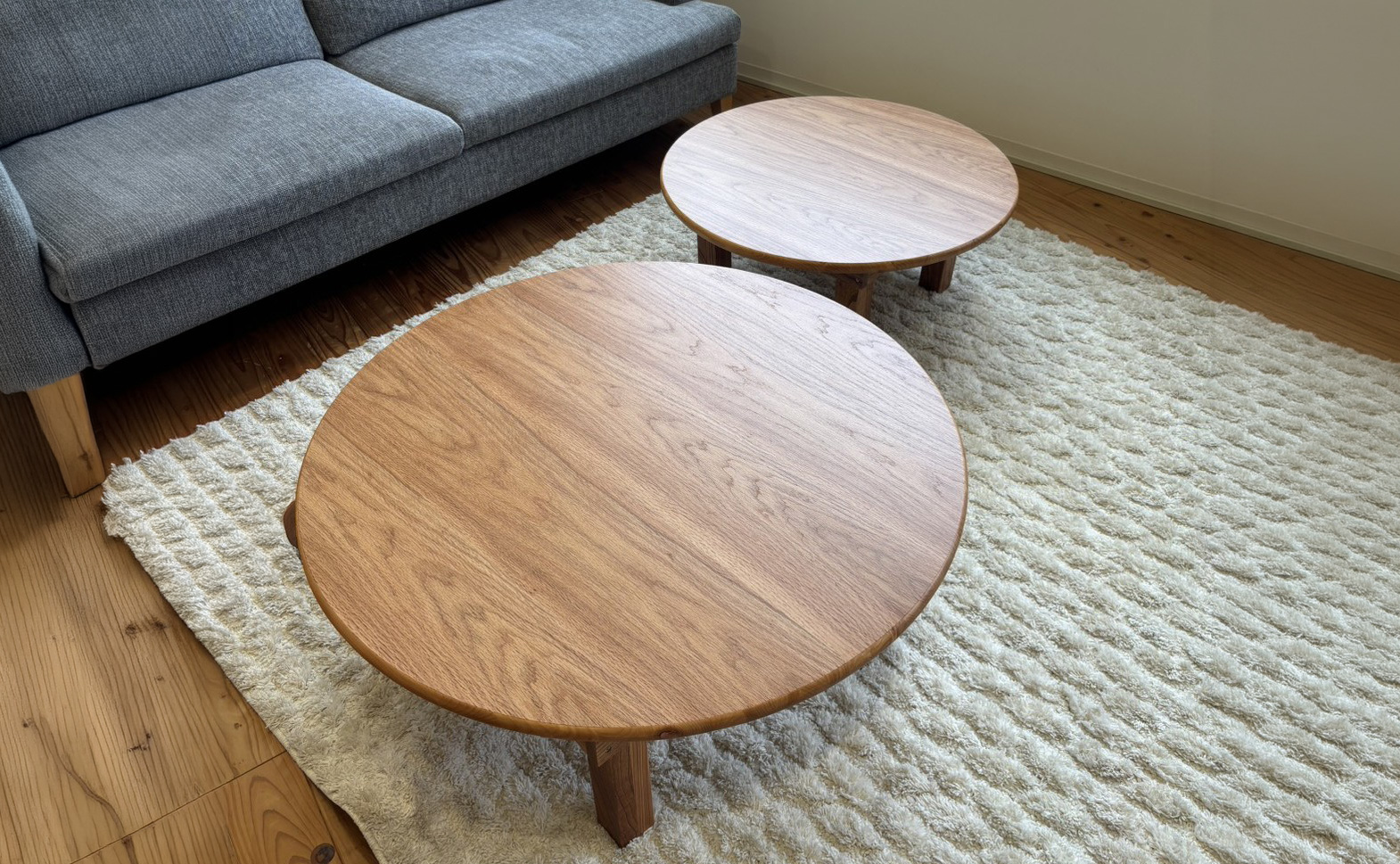
That regional network made it possible to turn a difficult hardwood into a practical table. The finished Chabudai has folding legs for easier storage and a round form suited to tea, casual dining or use as a low coffee table.
A piece of furniture cannot solve every forest problem
Choosing a Kunugi table will not solve every challenge facing Japan's forests. The value of this project is more specific: it creates one visible destination for trees whose traditional use is declining.
When grown wood can be harvested, used with care and followed by the next generation of trees, furniture becomes part of a longer cycle. The grain on the tabletop is not perfectly uniform. Its variation records the life of the tree and gives every table an individual character.
Bring the story into your home
The Japanese Sawtooth Oak (Kunugi) Folding Chabudai is available through Okawa Kagu's international online store. It is currently listed as made to order, with shipping included in the displayed product price.
Shop the Japanese Sawtooth Oak (Kunugi) Folding Chabudai
Available destinations, delivery conditions, customs duties and taxes may vary. Please review the latest information displayed for your country on the product page before ordering.
Read the original Japanese feature about Kunugi and the forest cycle.
Natural wood varies in grain and color. Material composition and other product specifications should be checked against the latest information on the product page.