
More Than a Heater: How a Kotatsu Makes Your Winter Special
A kotatsu does more than keep your feet warm. It makes time with family and pets, and time on your own, feel special. Here's what makes it so appealing, along with its history of more than 500 years.

Japan has a word, kotatsumuri (kotatsu snail), for someone who can't climb out of the kotatsu. It's a pun on katatsumuri, the word for snail: like a snail in its shell, they stay put. Once you've felt that warmth, it's hard to leave.
A kotatsu is a traditional Japanese heated table: a table with a heater on its underside and a blanket draped over it. But it's more than a way to warm up. In winter, it's where people naturally gather, conversations start, and everyone gets a chance to relax.
On this page, we look at the special time a kotatsu gives you, and at why it has stayed so loved in Japanese homes through its long history.
The Time a Kotatsu Gives You
A kotatsu makes winter feel special. Let's start with the kinds of moments it creates.
A Place Where Family, Friends, and Even Pets Gather
Put a kotatsu in your living room, and something curious happens: before you know it, your family has gathered around it.
Under a kotatsu, everyone sits lower and shares one blanket. That brings a relaxed closeness that feels different from sitting on a sofa or at a dining table. You might watch TV, play games, or just chat about nothing in particular. A kotatsu simply makes people want to stay together.
And it isn't only people who join in. Dogs and cats are drawn to its warmth, too.


Pure Comfort, All to Yourself
A kotatsu makes time alone special, too.
The moment you slip your legs under the warm blanket, the cold outside and the rush of the day seem to fade away.
Read a favorite book, watch a movie, or listen to music with a warm drink in hand. A kotatsu gently wraps you in time that's just for you.

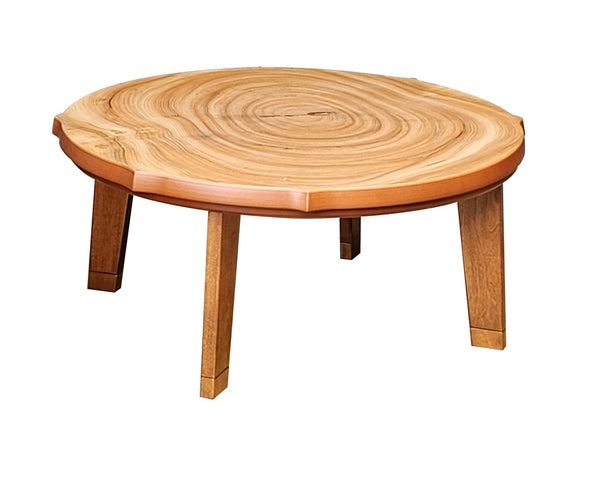
Kotatsu Just Right for Living on Your Own
From Warming Cold Feet to the Heart of the Home
The kotatsu became a place where families gather and where you can unwind on your own. It took more than 500 years to get there, and it all began as a way to get through bitter cold.
Over 500 Years AgoAn Idea Born in Cold Houses
Traditional Japanese houses were built with airflow in mind above all, to stay comfortable through hot, humid summers.
The trade-off came in winter: drafts blew through, and it could be freezing even indoors.
The answer was a wooden frame set over an irori, a sunken hearth in the floor, with clothing draped over it to keep people's feet warm. This is said to be the earliest form of the kotatsu.
The kotatsu began as everyday ingenuity, born of a simple wish: to keep your feet warm, if nothing else.

The 1600s–1800sBlankets Make Winter a Pleasure
From the seventeenth to the nineteenth centuries, the kotatsu became part of everyday life.
Then came the portable kotatsu (okigotatsu), heated by a charcoal brazier called a hibachi, which people could carry from room to room. And as cotton-padded blankets spread, people draped those over the frame instead of clothing, making the kotatsu much warmer and more comfortable.
You can still try a traditional brazier-heated kotatsu in Japan today. In Yanagawa, a canal town next to Okawa City, Fukuoka, where we're based, seasonal kotatsu boats run in winter. Small boats called donkobune carry a kotatsu warmed by a brazier, and you stay toasty as you glide along the old castle moats. It's one of Yanagawa's winter traditions.
For details, see Yanagawa City's official page: Kotatsu Boat (English / 简体中文 / 繁體中文 / 한국어, machine translation)

The 1900sGathering Around the Table
In the twentieth century, the kotatsu changed shape dramatically.
In the early 1900s, the British potter Bernard Leach, who was living in Japan, found it hard to sit in seiza, kneeling on the floor. Wondering whether he could make a kotatsu he could sit at with his legs down, he is said to have dug out the floor of his home and built a sunken kotatsu (horigotatsu). This idea, born from an outsider's point of view, went on to spread into Japanese homes.
In 1929, the electric kotatsu arrived, so people could keep warm without burning charcoal.
Then, around 1959, setting a tabletop over the blanket caught on in homes. With a tabletop, the kotatsu went from a place to warm up to a table where families eat, drink tea, and talk.
The Japanese Kotatsu for Today's Homes
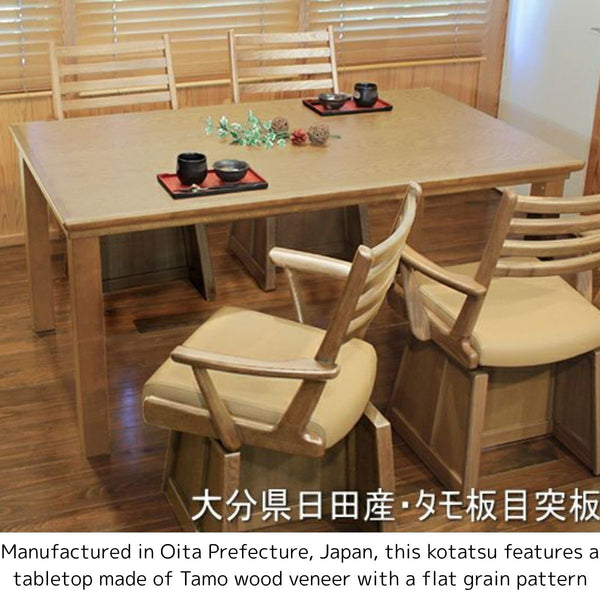
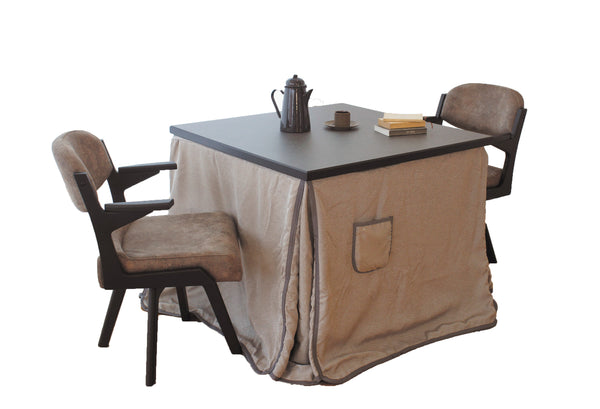
You might think a kotatsu is only for sitting on the floor. But just as Leach wanted to sit with his legs down, today there are chair-height kotatsu. A dining-height kotatsu lets you enjoy kotatsu warmth right at your dining table.
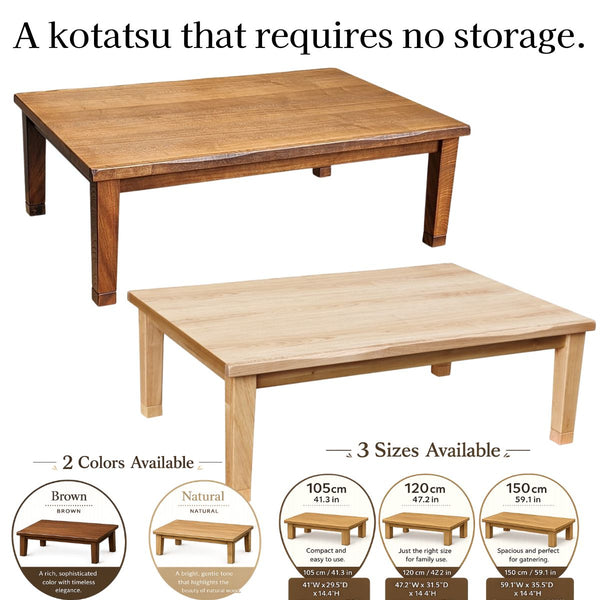
And a kotatsu isn't just for winter. Take off the blanket, and it works as a low table or dining table all year.
Our kotatsu are made by Japanese artisans from woods such as sugi (Japanese cedar), walnut, Japanese ash, and camphor wood. An artisan-finished wooden kotatsu slowly deepens in color with every winter you spend with it. The time you spend around it becomes part of the furniture itself. That's one of the pleasures of a kotatsu made from real wood.
A Winter That Warms Body and Heart
A kotatsu is more than a heater. It brings people closer, wraps your time alone in comfort, and makes winter richer.
The kotatsu has warmed Japanese winters for more than 500 years. Bring one into your home, and let its warmth relax body and heart all winter long.